37. Dorset Gardens Project Details: 99-Year Leasehold—Key Buyer Considerations
When you are shopping for a new condo, it is easy to get pulled in by the marketing polish, the renderings, and the convenient promise of “direct developer” pricing. With Dorset Gardens, the story starts with something more concrete: it is positioned as a 99-year leasehold condominium on Dorset Road in Singapore’s District 8, near Farrer Park MRT.
From there, the buyer’s job gets more technical. A lease term is not just a line item in a brochure. It affects how you evaluate long-term value, resale expectations, loan comfort, and even the way you should compare one project against another. If you are considering Dorset Gardens condo, thinking through leasehold implications early can save you from a lot of second-guessing later, especially once you see price list numbers and the fine print that usually comes with registration and showflat viewings.
Below are the practical considerations I would focus on for Dorset Gardens project details, including what we can verify from public information, what you should double-check, Dorset Gardens and how to assess whether a 99-year leasehold is a fit for your timeline.
Where Dorset Gardens sits, and why it matters for value
Dorset Gardens is marketed as a new condo launch on Dorset Road, District 8, near Farrer Park MRT. That location context matters for two reasons.
First, District 8 is a mature, established area where residents tend to care about everyday convenience as much as long-term infrastructure. Proximity to an MRT station typically influences rental demand and resale liquidity, particularly for units that are accessible to commuters.
Second, being next to a transport node often shapes the buyer pool. When many buyers want the same kind of convenience, pricing power can be more stable than it would be in a location where the demand is narrower. That does not automatically mean the unit will appreciate, but it tends to reduce the risk of “staying stuck” if you need to sell later.
One more practical point I always remind friends: location only tells you part of the story. You still need to match the leasehold term, the unit mix, and the development’s overall configuration with your own plan. A great location can help resale, but lease structure can still change the way buyers and lenders view the product.
The headline feature: 99-year leasehold, and what to read between the lines
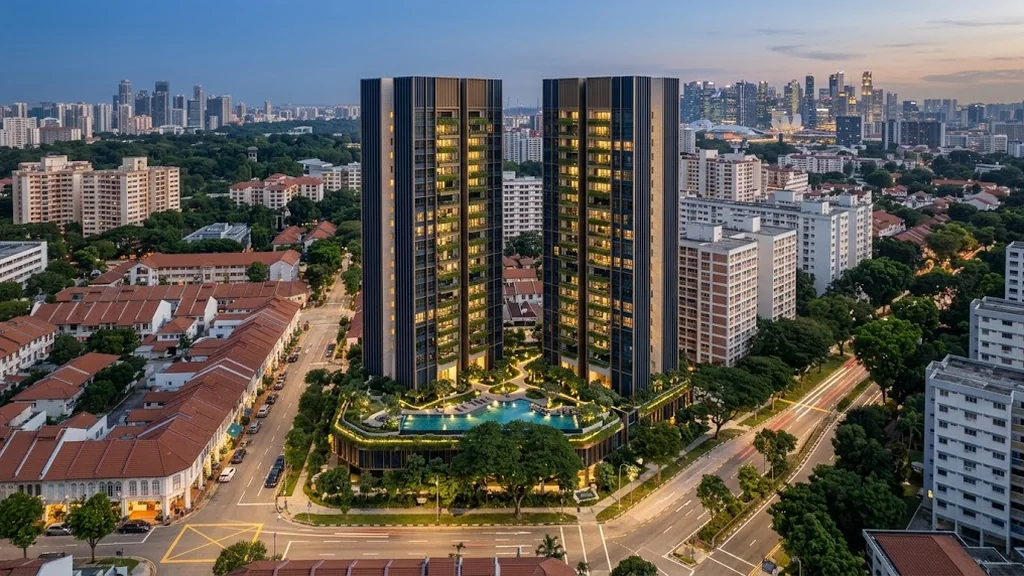
Public descriptions of Dorset Gardens refer to a 99-year leasehold tenure. The project is also described as having about 428 homes across two 27-storey towers.
A 99-year lease is not unusual in Singapore’s condo landscape, but it does change the way you should evaluate long-term outcomes. The core mechanic is simple: a unit’s effective lease remaining decreases year by year. When you look forward to resale, buyers often anchor on the remaining lease length and also on how “comfortable” that remaining term is for banks and future purchasers.
Because we are dealing with a new launch, there is a second nuance: you need to know what stage of the lease you are actually buying into at the point of completion, not just the headline number printed in marketing materials. Two 99-year projects can still play very differently depending on timing and the lease commencement year.
What I would avoid is treating “99-year leasehold” as a fixed, reassuring fact and then moving on. In real buyer decisions, leasehold term is one of the first things that should influence whether you plan to hold for 5 to 7 years, 10 to 15 years, or longer.
The development scale: 428 units, two towers, and how that can affect your buyer pool
A development described as roughly 428 homes across two towers has implications even before you get into unit types.
In practice, larger projects tend to do better on “product standardization” for resale. That is because buyers can compare similar units more easily, and agents have more comps to work with. It can also mean a more predictable rental tenant profile, since a bigger pool of residents is more likely to include various household sizes.

At the same time, higher unit counts can increase competition at the resale stage. If you are selling after a few years, you may find other units in the same project or nearby projects in similar price bands. The trade-off is that you are not only competing against other projects, you are competing against the project’s own supply of resale units.
Two towers also affect how you might experience the building daily. Without making up details that are not confirmed publicly, the general principle is that tower separation can influence privacy, wind flow, and how certain units feel in terms of outlook and natural light. When you are viewing a showflat for Dorset Gardens new condo, I would not only look at the interior. I would ask about how the tower orientation and massing affects the unit you are considering, because “same stack, different feel” happens more often than buyers expect.
Dorset Gardens developer background: why consortium structure affects confidence
Verified information indicates the site was won by a consortium of UOL, Singapore Land Group (SingLand), and Kheng Leong Company. One source states the JV shareholding as UOL 60%, SingLand 20%, and Kheng Leong 20%.
Why does this matter to a buyer? Not because you need to be an expert in corporate structures, but because consortium makeups can influence execution culture and project management style. The strongest practical value is that a consortium of established players generally signals a serious approach to delivery and funding. Still, you should treat this as “confidence support,” not a substitute for diligence.
If you are evaluating Dorset Gardens project details, also remember that some marketing pages discuss “direct developer” price mechanics, but the binding reality is always the confirmed contract terms and official schedules. Marketing materials can be helpful, but the purchase decision should be anchored in what is contractually deliverable, including tenure, development particulars, and the standard components of unit specifications as reflected in the official documents.
The purchase reality: what “direct developer price” means during launch, and what buyers should watch
Public listings for Dorset Gardens / Dorset Road GLS advertise brochure downloads, price list registration, and showflat appointment booking. However, reliable official confirmation of a full brochure or final pricing schedule was not shown in the verified information you have here, so it would be unsafe to treat any advertised figures as final.
That said, the launch process usually comes with two buyer traps:
- People feel pressured to register because they assume price lists are public later and miss the best clarity window.
- People focus on the headline price per square foot (or similar) and then fail to understand what the pricing is actually built from.
One buyer reference we do have is tied to the government land sale. The bid awarded for the Dorset Road site is described as S$524.3 million, or S$1,338 psf ppr. That number is helpful, but it is not the same as what buyers pay for a finished unit. It does, however, give you a reality check on land cost intensity, and that can help frame whether a “premium” pricing strategy is plausible.
If you are considering Dorset Gardens pricing, treat all launch-preview pricing references as preliminary unless and until the developer provides the official price list and the terms you can review with your solicitor or agent. A careful approach can keep you from making a decision based on marketing tone rather than contractual content.
Leasehold decision-making: the questions that separate a good buy from a stressful one
When you hear “99-year leasehold,” it is tempting to think the choice is binary: buy or don’t buy. In reality, it’s more about your timeline and your exit strategy.
If you intend to hold a unit for a long period, you should be more sensitive to how the remaining lease at your intended resale time might look. If you plan to sell sooner, the lease term still matters, but it may matter differently, because early resale buyers are more likely to prioritize livability and convenience, especially if the project is still relatively new.
The tricky edge case is when a buyer buys a leasehold condo and ends up selling under less favorable market timing than expected. That is when lease terms can become a bargaining factor, particularly if comparable options with longer remaining lease are available.
Here are the practical questions I would insist on getting answered clearly before signing anything for a Dorset Gardens condo:
- How is the lease commencement year defined for this site, and how does that translate into effective remaining lease at completion?
- Are you buying a unit that will still have a lease profile comfortable for your expected holding period?
- How does the remaining lease affect your financing comfort and any bank’s typical underwriting expectations?
- Does the developer’s official schedule align consistently with the stated 99-year tenure across documents you can review?
- If you are comparing with other projects, are you comparing apples-to-apples on lease commencement timing, not just the headline “99 years”?
If you cannot get direct answers, that is a warning sign. Buyers should not have to “guess” when it comes to lease tenure.
A focused due diligence checklist before you commit
Before you book a Dorset Gardens book appointment or spend time discussing stacks and unit choices, you should do a quick internal due diligence pass. It keeps you anchored when sales staff start steering the conversation toward urgency.
Here is a compact checklist that aligns with what you can verify from public-facing project information plus what you should confirm during the official sales process:
- Confirm the tenure stated in the official documents you receive, not only marketing lines about “99-year leasehold”
- Ask for the official development details tied to the 428 homes and two-tower configuration, and how those map to your stack selection
- Request clarity on what “price list” registration gives you, and when you receive the final, signed price terms
- Verify the estimated timeline you are being told, then cross-check with what is written in official documentation you can review
- Prepare a resale and holding timeline for yourself, and compare lease remaining on your intended exit date
If you do this, the showflat visit becomes more productive. You are not only checking finishes, you are validating whether the project fits the financial reality of a 99-year lease.
Dorset Gardens new launch: how to use the showflat visit without getting distracted
A Dorset Gardens view showflat is where emotion often takes over. The biggest mistake I see is treating the interior as the whole decision, especially when the big differentiator for leasehold buyers is tenure and long-term flexibility.
During the visit, bring a practical mindset:
- Pay attention to orientation and natural light, but also how the layout supports resale appeal. Even without knowing the unit’s exact facilities, a functional living and bedroom arrangement can matter more than some cosmetic choices.
- Ask questions that connect your unit choice to the tower structure and the overall development plan. If the development is two towers, the unit you choose should feel meaningfully different in outlook and privacy even if the floor level is similar.
- Watch how the sales conversation handles lease tenure. Good representatives can explain how tenure is defined in the documents. Vague answers should slow you down.
If you are comparing Dorset Gardens new launch options with other projects in the same price range, you should also compare the buyer pool logic. A project near Farrer Park MRT can attract certain tenants and buyers based on convenience. But at resale time, the remaining lease and the project’s relative position in the market will still matter.
Pricing signals you can actually use, without overreaching
Because the verified context does not confirm final unit pricing, the safest approach is to use what we do have as a directional signal, not a promise.
The Dorset Road site bid amount of S$524.3 million and the cited land cost reference of S$1,338 psf ppr give a sense of land value intensity for the site. When land cost per square foot ppr is high, developers often price in a way that reflects that cost, adjusted for construction and market conditions.
But final pricing for Dorset Gardens pricing will be shaped by more than land cost. It will depend on the mix of unit sizes, demand during launch preview and registration, and competitive pricing in the same period. That is why you should be ready to evaluate unit-specific pricing, not just “project-level” numbers.
If you are getting a price list, make sure you understand the unit size basis, the total payable amount structure, and any lease-related considerations as they appear in official terms. When you see the numbers, it helps to do a simple internal test: does this price still look reasonable under your expected holding period, given lease countdown reality?
Location near Farrer Park MRT: the practical advantage buyers forget to price in
Dorset Gardens location is described as near Farrer Park MRT. This kind of proximity can show up in multiple ways that buyers feel immediately, not just when they read a map.
For owner-occupiers, daily commuting convenience reduces the “cost of living friction.” For investors, the same convenience can widen the tenant pool. And for resale, it can make your unit easier to market to buyers who want a straightforward, established transport connection.
That said, I do not treat MRT proximity as a magic multiplier. It changes the buyer pool, not the laws of lease economics. If the lease remaining becomes uncomfortable at resale, even a good location may not prevent price pressure.
So the location advantage should be part of your overall balance, alongside the 99-year leasehold term and the development’s scale of about 428 homes. These three factors together will influence liquidity.
Practical guidance on what to compare against, given it is a 99-year lease
Many buyers get stuck in a narrow “Dorset Gardens vs similar listings” comparison. The more useful approach is to compare leasehold risk and liquidity across nearby alternatives.
Even without naming specific competing projects, the logic stays the same:
If you buy a 99-year leasehold new condo and plan to hold for a shorter time, your decision is mostly about how well the unit fits your lifestyle and how quickly you can sell if needed. If you buy with a longer plan, you should treat remaining lease as a core valuation input, not a footnote.
When you are evaluating Dorset Gardens condo options, do not compare only price per square foot. Compare your “effective lease comfort” on your likely resale date, compare how the unit layout supports resale, and compare the depth of demand implied by the location near Farrer Park MRT.
What to do next if you are seriously considering Dorset Gardens
If the verified Dorset Gardens project details align with your timeline, the next step is usually straightforward: book a showflat appointment to validate what you can feel and see, then request the official documents that explain tenure and schedules.
Because marketing pages indicate registration for brochure downloads and price list-related steps, you should treat your registration as an information-gathering event. The goal is to leave the process with clarity, not with pressure.
A clean way to approach it is to decide your minimum requirements before you go. If tenure clarity, official pricing terms, and unit selection constraints do not meet your standards, you walk away without guilt. In leasehold purchases, confidence matters because the decision will still sit with you months later when the market moves.
If you want, tell me what kind of buyer you are planning to be for Dorset Gardens, owner-occupier or investor, and your intended holding period. I can help you build a buyer-specific lens for a 99-year leasehold decision, using the Dorset Gardens project details you have here.